Case study · 2026 · Startups · Real Estate
Leasing Operations MVP for a PropTech Startup
A pre-seed proptech founder had a validated problem — small property managers drowning in leasing paperwork — and a deadline: pilot commitments that would expire if there was nothing to pilot. We scoped and shipped an MVP in fourteen weeks: applicant screening workflow, lease-renewal automation, and an owner portal, built narrow and instrumented deeply so the next quarter's roadmap would come from usage, not opinion.
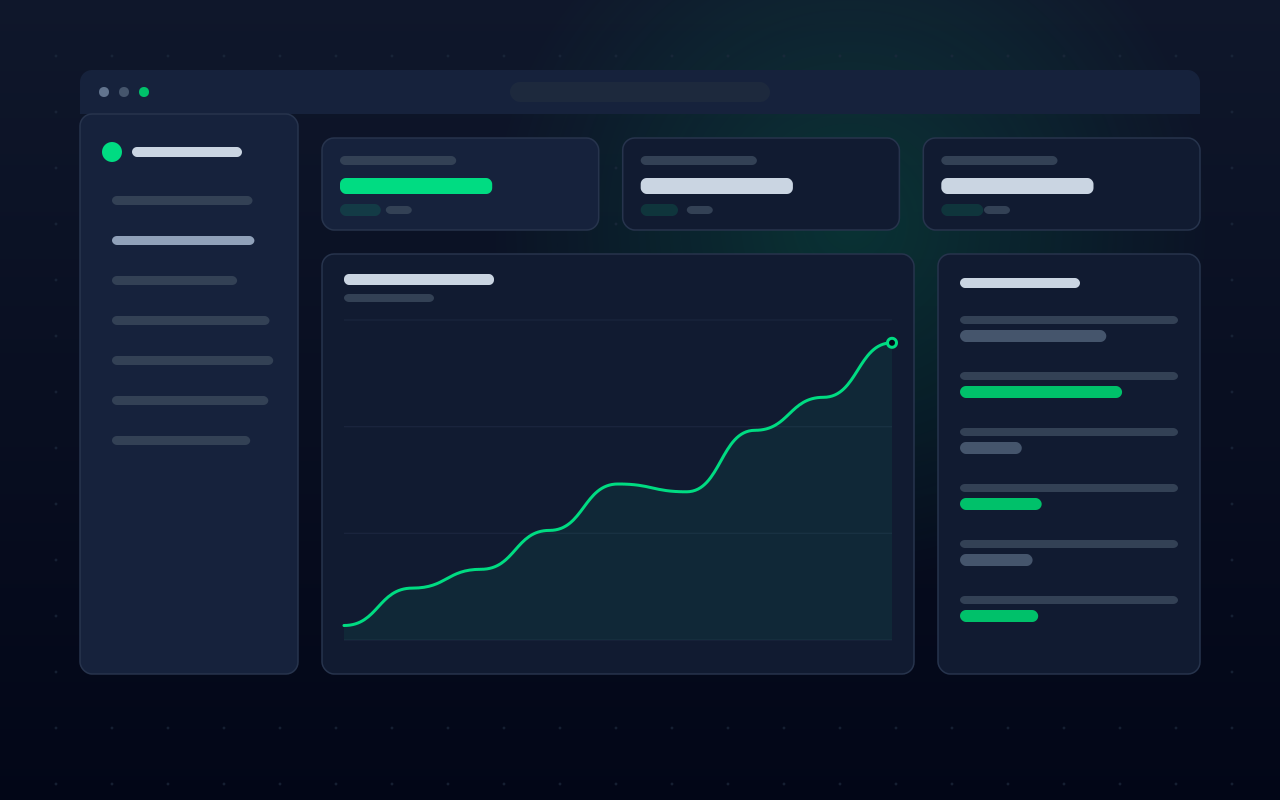

Screens are illustrative recreations — client interfaces stay confidential.
The challenge
The temptation was to build property management software — all of it. The discipline was choosing the three workflows the pilot customers actually bled on, and deferring everything else without closing doors architecturally.
Pilot managers were spreadsheet-fluent skeptics: the MVP had to beat their current process on day one of onboarding, or they'd politely finish the pilot and quietly go back.
What we built
Scope by evidence
Two weeks of shadowing pilot managers produced a workflow map scored by frequency and pain; applicant screening, renewals, and owner reporting won — waitlists, maintenance, and accounting explicitly deferred.
Weekly usability loops
Every Friday, that week's build went in front of a pilot manager on their real workload; Monday's backlog was reordered from what stumbled, keeping the design honest against actual use.
Boring, fast foundations
React, Node.js, PostgreSQL on AWS with feature flags from day one — architecture chosen so a team of three ships weekly, and pilot-stage decisions don't foreclose the scaling story.
Instrumented for the next decision
Activation, workflow completion, and time-saved events were designed alongside the features — the seed-stage roadmap conversation happens over cohort charts, not anecdotes.
The results
- 14 wks
- Concept to paying pilot
- 940
- Units live in pilot
- −55%
- Renewal processing time
including two weeks of discovery
across 6 buildings by week 14
vs. pilot managers' tracked baseline
- Concept to first paying pilot in fourteen weeks, with all six committed buildings onboarded by week ten.
- Renewal processing time for pilot managers dropped 55% against their tracked baseline.
- 940 units live in the pilot at wrap, with activation and retention data shaping the post-pilot raise narrative.
Client identities stay confidential; figures are rounded from end-of-engagement delivery reporting.
Stack & expertise
- React
- TypeScript
- Node.js
- PostgreSQL
- AWS
- feature flags

Multi-Tenant Replatform for a Workforce-Scheduling SaaS
From per-customer snowflakes to a true multi-tenant platform — 63% faster p95, 44% lower infrastructure cost per customer, zero-downtime migration.

Digital Front Door for a Multi-Clinic Medical Group
Online scheduling, digital intake, and iPad check-in kiosks that cut no-shows 29% and reduced front-desk check-in from 9 minutes to under 3.
Route Intelligence for a Regional Courier Network
Dispatch platform with learned travel times and constraint-aware route building that cut fleet distance per stop by 16% without adding vehicles.