Case study · 2025 · Martech · Advertising
Web Platform & Design System for a Martech Startup
A martech startup's site was costing it credibility: a page-builder assembly that loaded in four seconds and needed an engineer for every copy change. We rebuilt it as a real platform — a token-based design system, a headless CMS with structured sections the marketing team composes themselves, and a Next.js front end held to a performance budget in CI — so the site finally demonstrates the competence the product sells.
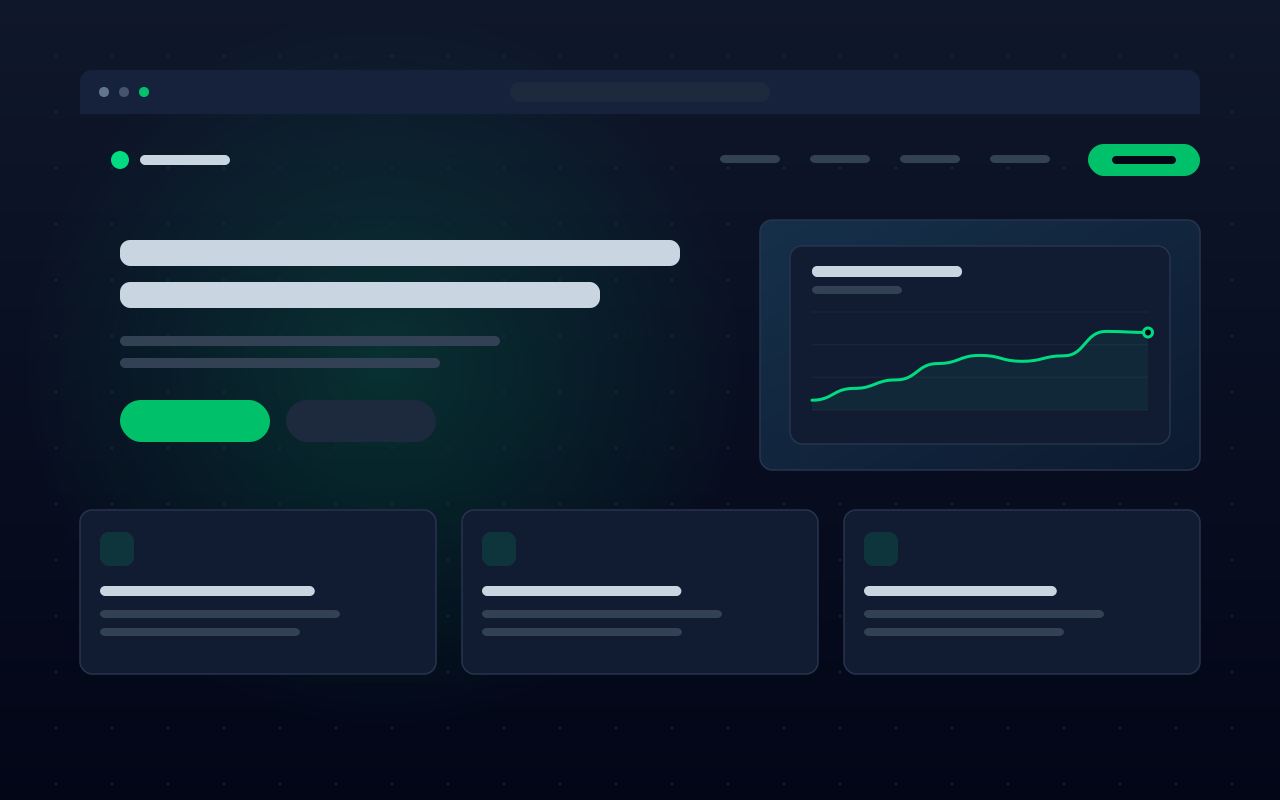
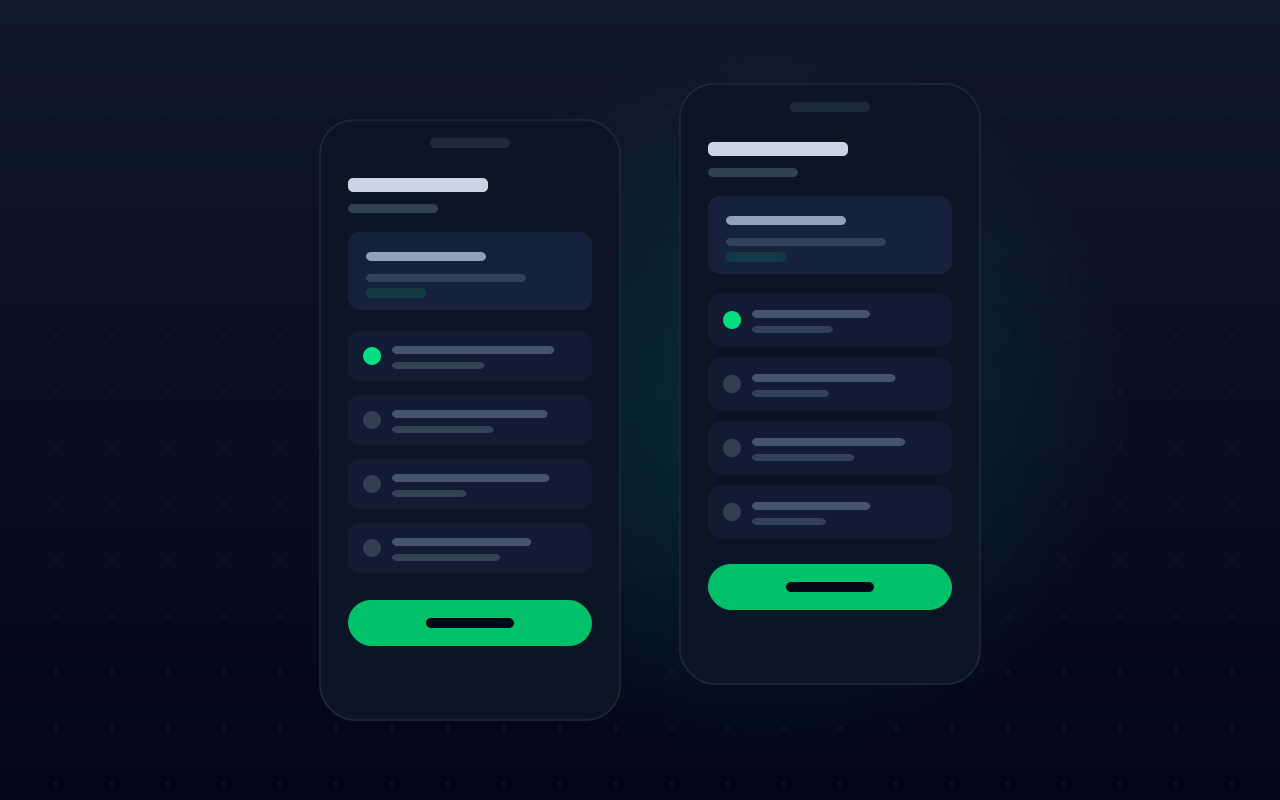
Screens are illustrative recreations — client interfaces stay confidential.
The challenge
Every campaign landing page was an engineering ticket, so campaigns launched late or launched ugly — and the four-second load was measurably burning paid traffic before the page even argued its case.
The startup needed the site to scale content without scaling headcount: two-person team, weekly campaign cadence, no tolerance for a system that decays back into snowflake pages.
What we built
Design system before pages
A token-based system — type scale, spacing, color modes, motion — expressed as a component library, so every page composed from it stays on brand by construction rather than by review.
Structured content, not page soup
A headless CMS modeling sections as typed, composable blocks with preview — marketing assembles landing pages from proven sections in minutes, and off-system layouts simply can't be built.
Performance as a CI gate
Static-first Next.js rendering with image discipline and script hygiene, held by a Lighthouse budget in CI — a regression fails the build instead of shipping quietly.
Accessible by default
Semantic components, keyboard-complete navigation, and contrast-checked tokens in both light and dark modes, audited before launch rather than retrofitted after.
The results
- 1.1 s
- Largest Contentful Paint
- 15 min
- Campaign page publish
- +38%
- Demo-request conversion
homepage, from 4.2 s — budget enforced in CI
marketing self-serve, from a multi-day queue
paid traffic, following quarter, stable spend
Lab measurements, throttled mobile profile, median of five runs per template.
View the data as a table
| Before | After | |
|---|---|---|
| Home | 4.2 s | 1.1 s |
| Product | 3.8 s | 1.2 s |
| Pricing | 3.4 s | 0.9 s |
| Blog | 3.1 s | 0.9 s |
- Largest Contentful Paint fell from 4.2 s to 1.1 s on the homepage, with every template under the 1.5 s budget.
- Campaign page publish time went from days (engineering queue) to under 15 minutes (marketing self-serve).
- Demo-request conversion from paid traffic rose 38% over the following quarter against stable spend.
Client identities stay confidential; figures are rounded from end-of-engagement delivery reporting.
Stack & expertise
- Next.js
- React
- TypeScript
- Sanity (headless CMS)
- design tokens
- Lighthouse CI
Industries
Technologies
Learning Platform for a Vocational Training Academy
A custom LMS with course authoring, cohort analytics, and bandwidth-tolerant video that lifted course completion 22 points.
Route Intelligence for a Regional Courier Network
Dispatch platform with learned travel times and constraint-aware route building that cut fleet distance per stop by 16% without adding vehicles.
Leasing Operations MVP for a PropTech Startup
Fourteen weeks from concept to a paying pilot — applicant screening, renewals, and an owner portal running across 6 buildings and 940 units.