Case study · 2024 · Supply Chain · Warehouse Management · Agriculture
Cold-Chain Telemetry for a Food Distribution Group
A food distribution group was protecting temperature-sensitive stock with clipboard rounds every few hours — which meant a failed compressor could cook a trailer of product before anyone noticed. We built the whole chain: gateway firmware on the trailers and cold rooms, a serverless ingestion pipeline, and an operations console that turns excursions into two-minute alerts and automatic compliance logs.
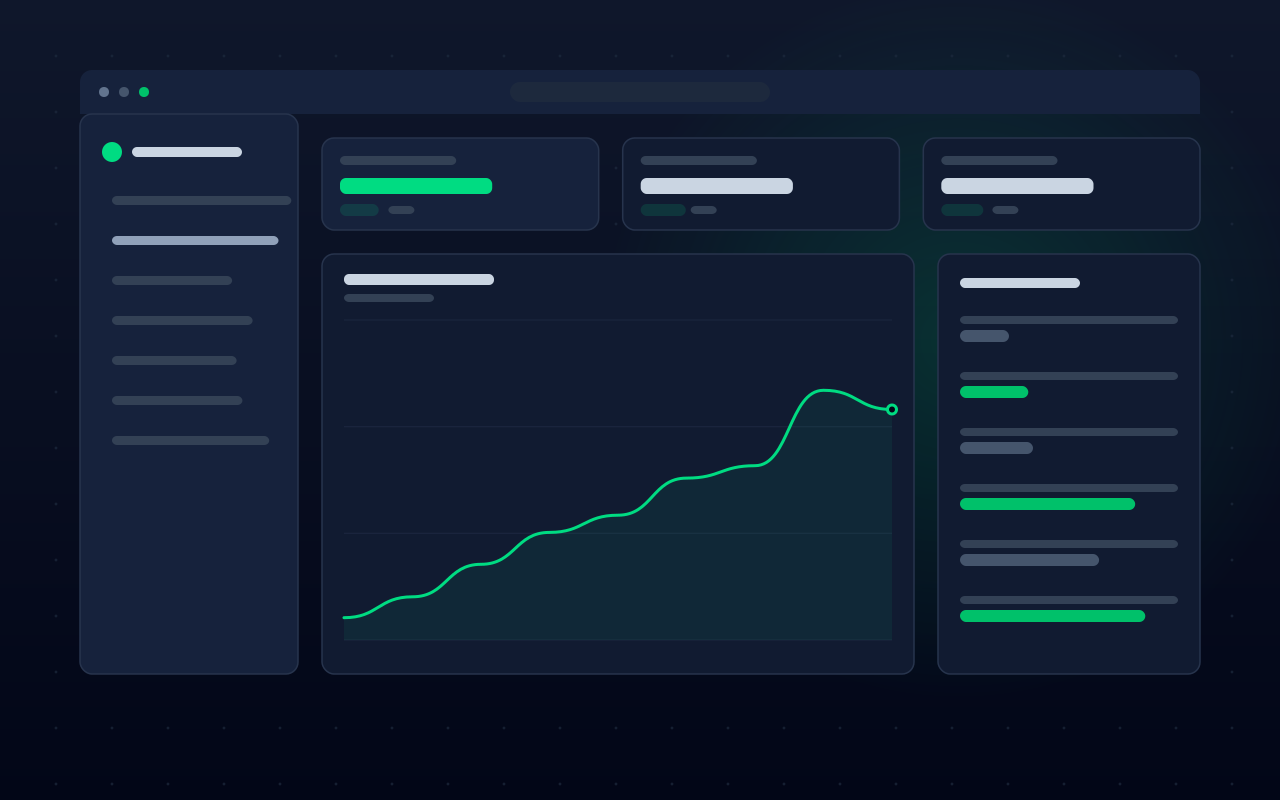

Screens are illustrative recreations — client interfaces stay confidential.
The challenge
Temperature checks happened manually every four hours across four warehouses and a 60-trailer fleet. Between rounds, nothing watched the product — and write-offs from undetected excursions were an accepted cost of doing business.
Retail customers were also tightening audit requirements. Recreating temperature histories from paper logs took days per request, and gaps in the record were becoming a commercial risk, not just an operational one.
What we built
Rugged sensor gateways
We wrote C firmware for LTE-M gateways paired with wireless temperature and door sensors — store-and-forward buffering, over-the-air updates, and battery behavior tuned for weeks of trailer dwell time.
Serverless ingestion pipeline
Readings flow through AWS IoT Core into a serverless pipeline that validates, deduplicates, and evaluates alert rules — no fleet-scale infrastructure to babysit, and cost scales with message volume.
Escalating alerts with context
Alert rules understand defrost cycles and door-open events, so notifications fire on real excursions rather than every blip — with escalation paths per site and asset type.
Compliance on autopilot
The console assembles HACCP-style temperature logs per asset and per shipment automatically, exportable in the formats the group's retail customers audit against.
The results
- 2.1 min
- Median time to alert
- −59%
- Spoilage write-offs
- 124
- Assets under continuous watch
from sensor excursion to acknowledged notification
month 6 vs. pre-launch baseline
trailers, cold rooms, and loading docks
- Median time from excursion to acknowledged alert dropped from the multi-hour clipboard cycle to 2.1 minutes.
- Spoilage write-offs fell 59% by month six, tracked monthly against the pre-launch baseline.
- Audit requests that took days of log reconstruction are now a filtered export — every monitored asset has a continuous, tamper-evident record.
Client identities stay confidential; figures are rounded from end-of-engagement delivery reporting.
Stack & expertise
- C (LTE-M gateways)
- AWS IoT Core
- AWS Lambda
- TypeScript
- React
- Python
Route Intelligence for a Regional Courier Network
Dispatch platform with learned travel times and constraint-aware route building that cut fleet distance per stop by 16% without adding vehicles.
Test-Bench Telemetry for an EV Component Lab
FPGA-based acquisition with microsecond-aligned timestamps across 32 channels, replacing a patchwork of instruments — test setup from 2 days to 3 hours.
Demand Forecasting for a Grocery Co-operative
Store-level demand models and a planner review queue that halved stockout hours and cut fresh-produce shrink 14% across 18 stores.