Case study · 2025 · Legal
Grounded Research Assistant for a Law Practice
A mid-size practice wanted the speed of an AI assistant without the two failure modes that make firms ban them: invented citations and leaked matter access. We built a retrieval-augmented assistant on the Claude API that only answers from the firm's own documents, cites every claim to a source paragraph, and enforces matter-level permissions inside the retrieval layer itself.
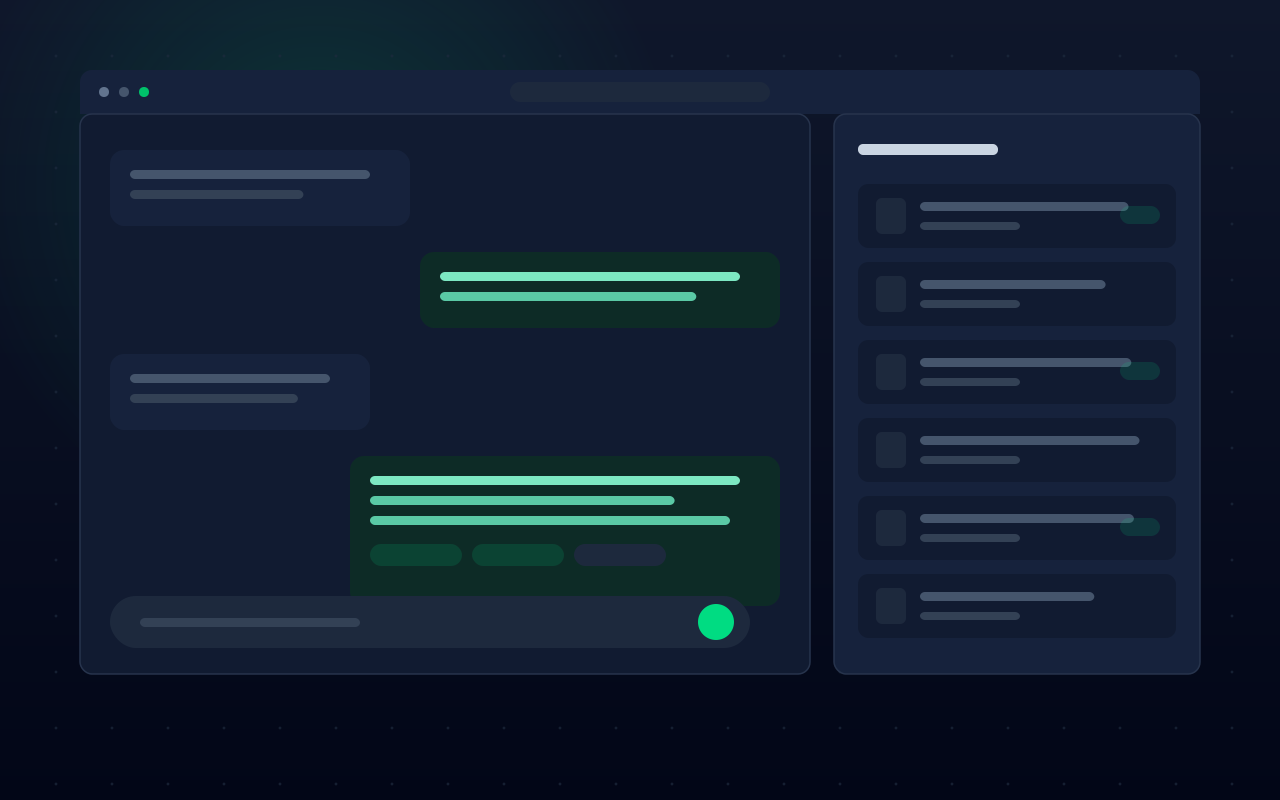
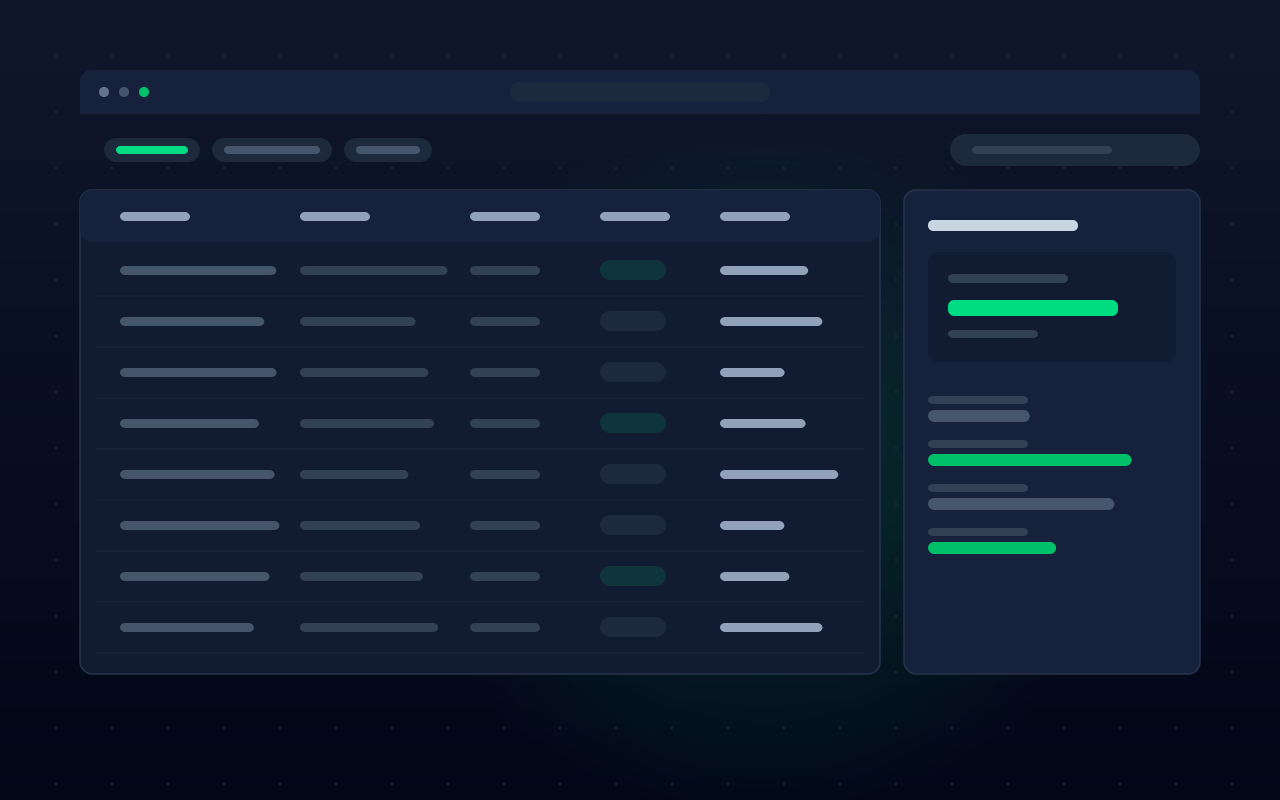
Screens are illustrative recreations — client interfaces stay confidential.
The challenge
Attorneys were spending large parts of billable days re-finding things the firm already knew — precedent language, prior matter summaries, negotiated clause positions — spread across a document management system that search barely penetrated.
Generic AI tools were off the table: the firm needed verifiable citations for anything an attorney might rely on, and hard guarantees that an associate could never retrieve content from a matter they weren't staffed on.
What we built
Permission-aware retrieval
Document chunks in PostgreSQL with pgvector carry the same matter-level ACLs as the source system, and the retrieval layer filters by the requesting attorney's entitlements before ranking — access control enforced below the model, not by prompt.
Citations or silence
The assistant answers only from retrieved passages, renders a citation chip per claim linking to the exact source paragraph, and says "not found in firm documents" rather than improvising.
Evaluation before rollout
We built a graded evaluation set with partner-reviewed answers and ran it on every prompt and model change; retrieval precision and citation accuracy had to clear agreed thresholds before each pilot expansion.
Fits the working day
A focused React workspace plus a document-panel sidebar — attorneys ask in context, compare clause language side by side, and export cited summaries into their drafting workflow.
The results
- −68%
- Median research time
- 100%
- Answers with source citations
- 92%
- Weekly active attorneys
to a first usable draft, across tracked task types
each claim linked to a source paragraph
eight weeks after firm-wide rollout
Self-reported task timing collected during the eight-week pilot, medians per task type.
View the data as a table
| Before | With assistant | |
|---|---|---|
| Precedent search | 38 min | 11 min |
| Clause comparison | 24 min | 8 min |
| Matter summary | 52 min | 14 min |
| Conflict check | 19 min | 6 min |
- Median time to a first usable research draft fell 68% across the four task types the firm tracks.
- Every production answer carries source citations; the firm's review found no unsupported claims in the launch audit sample.
- 92% of attorneys were using the assistant weekly within eight weeks of firm-wide rollout.
Client identities stay confidential; figures are rounded from end-of-engagement delivery reporting.
Stack & expertise
- Claude API
- Python
- FastAPI
- PostgreSQL + pgvector
- React
- TypeScript
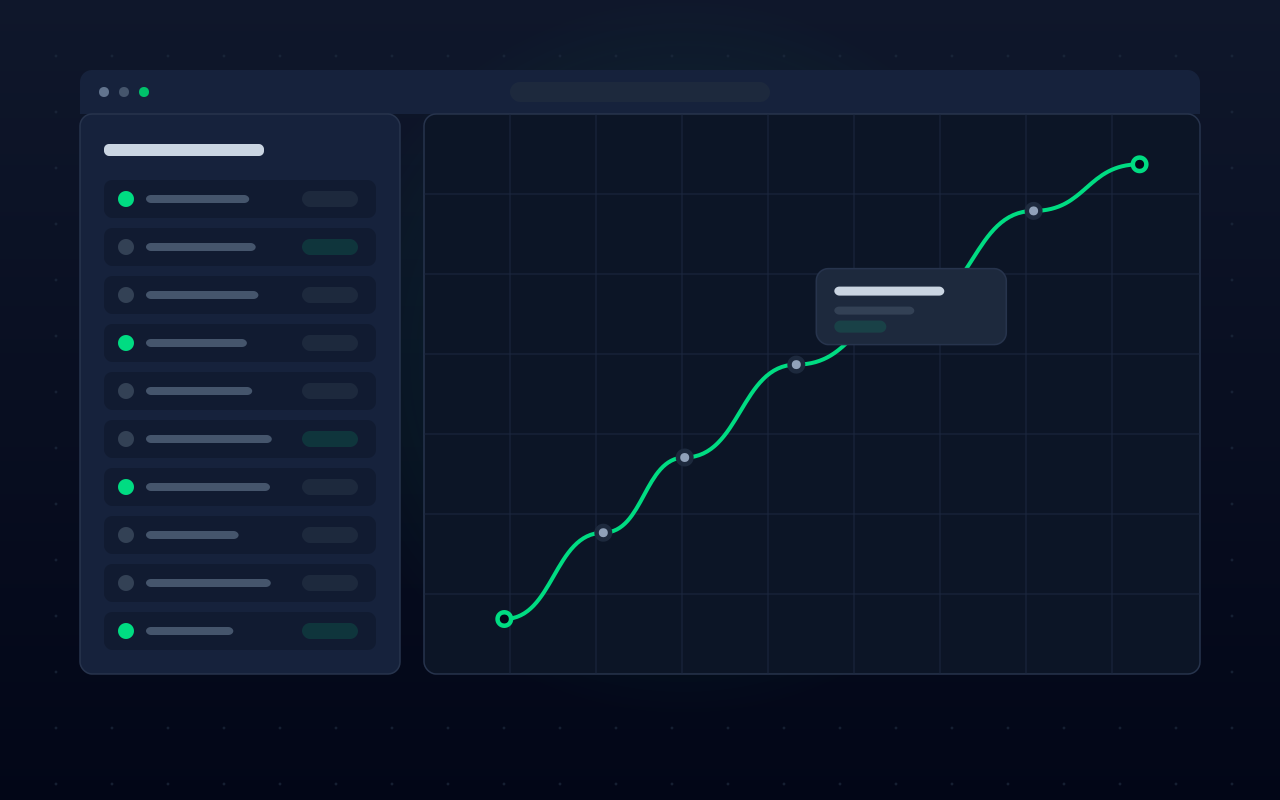
Route Intelligence for a Regional Courier Network
Dispatch platform with learned travel times and constraint-aware route building that cut fleet distance per stop by 16% without adding vehicles.
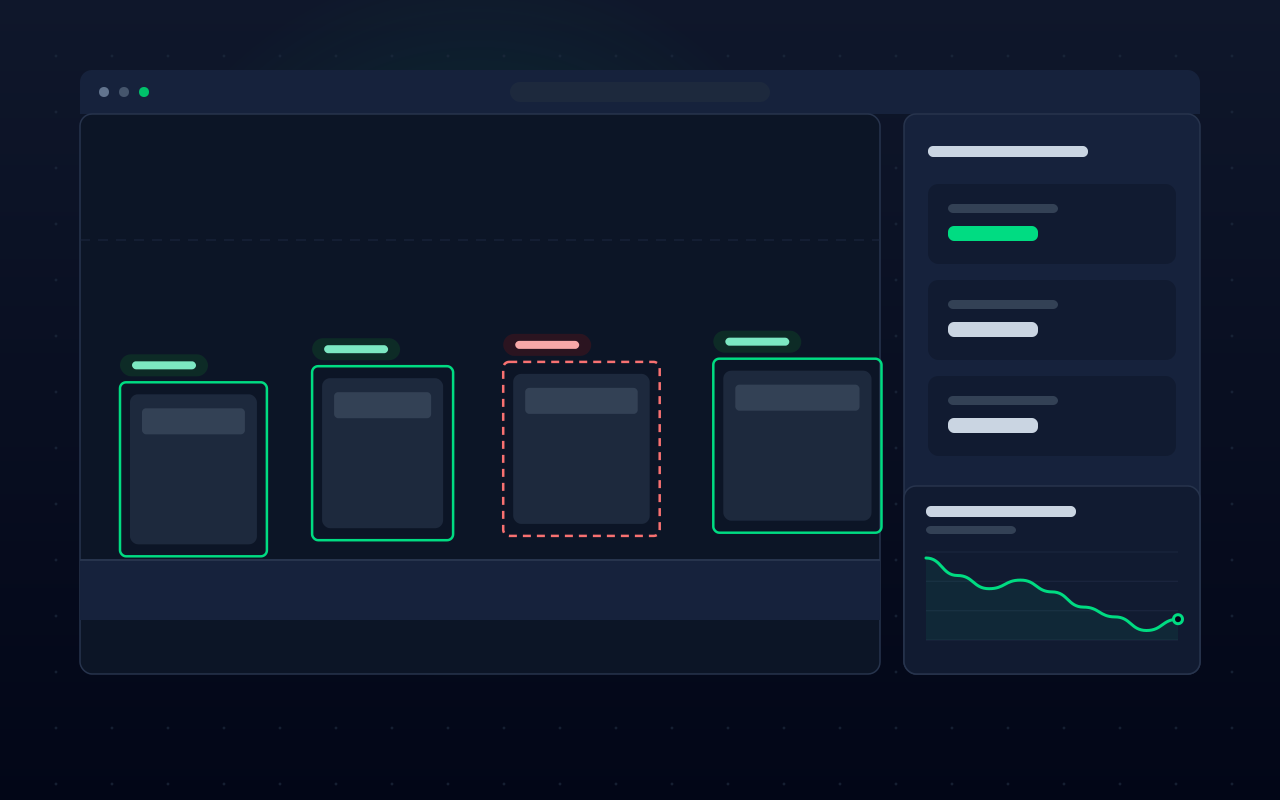
Vision Inspection on a High-Speed Packaging Line
Edge-deployed defect detection at 96 units per minute, with an operator feedback loop that pushed escaped defects down 84% in six months.
B2B Commerce Replatform for a Building-Materials Distributor
A headless storefront wired live into the ERP — contract pricing, branch stock, quote-to-order — that took online order share from 8% to 27% in nine months.